Sciatica PRO+ blog
When a Product Is Named After a Diagnosis
The most persuasive words on most supplement packaging are the ones nobody had to substantiate.
Start here
Two kinds of words on one box
Pick up any supplement and you are holding two kinds of writing at once. Some words on that container are regulated: their placement, their units, their permitted sentences and the small print that must accompany them. Other words on the same container are not regulated at all.
The regulated part is the part most people skip. The unregulated part is what everybody reads first, repeats to a friend and types into a search box. On a great many products in this category the strongest claim on the package is made by the one piece of text nobody had to substantiate: the name. Sciatica PRO+ is the worked example, and an unusually clean one, because the regulated half of this package is written correctly.
Structure/function
What a supplement label may say
Start with what a supplement may say about itself. The FDA describes a narrow category of permitted claim: A structure/function claim may “describe the role of a nutrient or dietary ingredient intended to affect the normal structure or function of the human body, for example, ‘calcium builds strong bones.’”
Read the example, not the rule
The agency’s illustration is deliberately modest, and it is the most useful part of the definition. Calcium builds strong bones. That is the shape of the strongest sentence this category may print: a nutrient, a normal body function, a contribution rather than a cure.
What that shape does and does not certify
Supports, helps maintain, contributes to. These are not weasel words; they are the outline of the only kind of claim a supplement may make, and a bottle that says it supports nerve health is a company that read the rule and followed it. What the correct shape does not certify is the evidence. A well-formed claim tells you the wording was drafted with care. It does not tell you the ingredient works, or that anyone tested it in the condition you have in mind.
Disease claims
What only a drug may say
On the other side of the line is the kind of claim that changes what a product legally is. A disease claim says a product can “diagnose, treat, cure or prevent any disease”. Only drugs may legally make one.
Where the line actually falls
Not on how confident a sentence sounds, but on whether it promises to act on a disease or a diagnosable condition. A product may say it supports nerve health; it may not say it treats neuropathy. It may say it supports normal nerve function; it may not say it relieves a compressed nerve root, because that is a clinical outcome and promising to change one is promising to treat.
The permitted sentence is vague by design
And the forbidden one is specific. Specificity sells, which is why the strongest language in this category so rarely appears in the regulated places and so often appears everywhere else — a headline, a testimonial, a web address, a name. None of those is the label.
The disclaimer
The sentence that travels with the claim
A structure/function claim is not supposed to travel alone. A disclaimer goes with it to say what the claim does not mean: “FDA has not evaluated the claim. The dietary supplement product is not intended to ‘diagnose, treat, cure or prevent any disease.’”
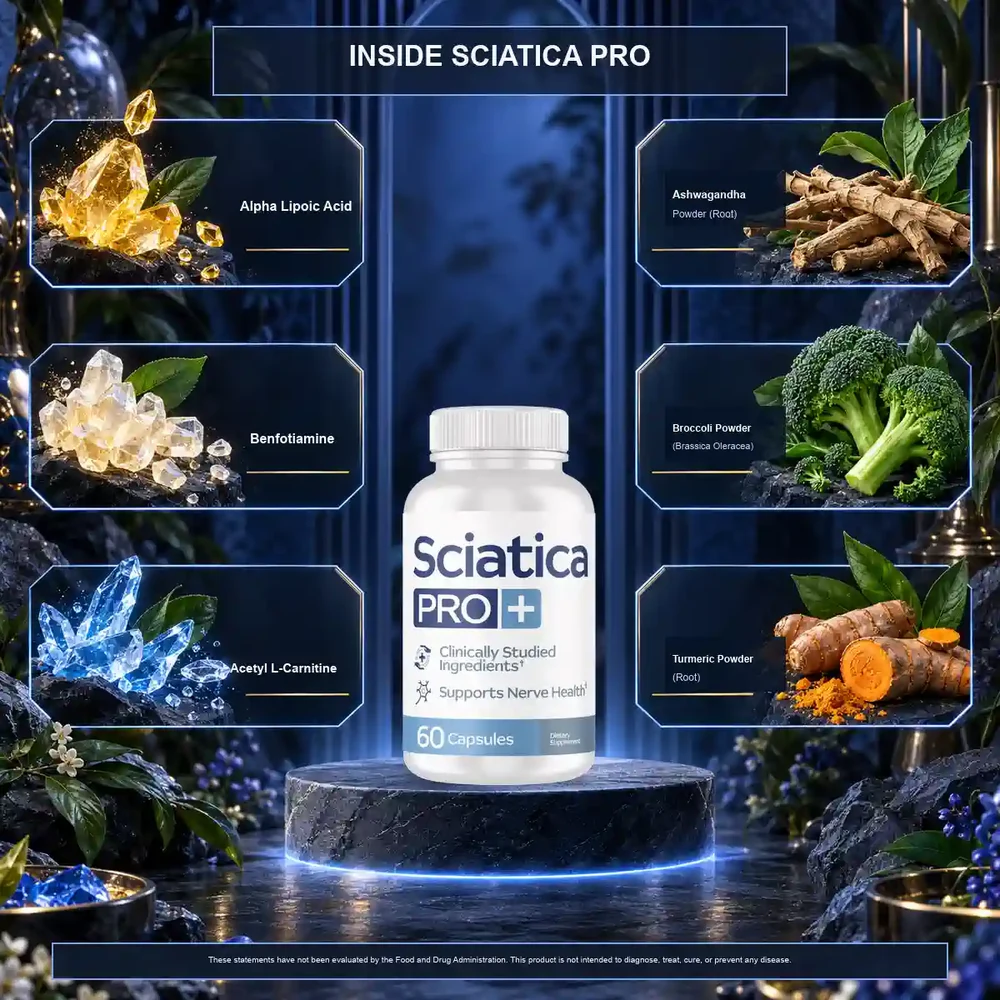
On this product it is printed on the label itself, in a grey box: “These statements have not been evaluated by the Food & Drug Administration. This product is not intended to diagnose, treat, cure or prevent any disease.”
Train your eye on the marker
The disclaimer is usually set in the smallest type on the package, beside an asterisk or a dagger tying it back to a claim on the front. This label uses a dagger and it resolves correctly: both front-panel claims carry one, and the disclaimer they point at is on the same artwork. That is how it is supposed to be done.
What the disclaimer is not
It is not an admission that the product is useless. It is the sentence telling you which kind of document you are holding.
The rule
Nobody approves the wording first
Now the part that surprises almost everybody, and the reason a well-written label proves less than people assume. These claims “are not pre-approved by FDA, but the manufacturer must have substantiation that the claim is truthful and not misleading and must submit a notification with the text of the claim to FDA no later than 30 days after marketing.”
Nobody clears the wording in advance
There is no desk at which a claim is submitted, reviewed and approved before printing. The manufacturer writes the words and the bottle ships. A phrase on a front panel has not passed anything, and a correct label describes its author’s care rather than an inspection.
The evidence lives in a filing cabinet
Substantiation is a genuine obligation, but the evidence sits in the company’s own files. Nothing requires it to be published and no public register exists, so the absence of a study you can read does not prove there is nothing behind a claim.
The agency is told afterwards
The notification goes to the FDA no later than thirty days after marketing begins. The product is on sale by the time the agency learns what the label says, and a notification is a filing, not an endorsement. No dietary supplement is FDA approved.
Worked example
The one part of the package with no rules
Everything above concerns claims. Now look at this package.
What the label prints
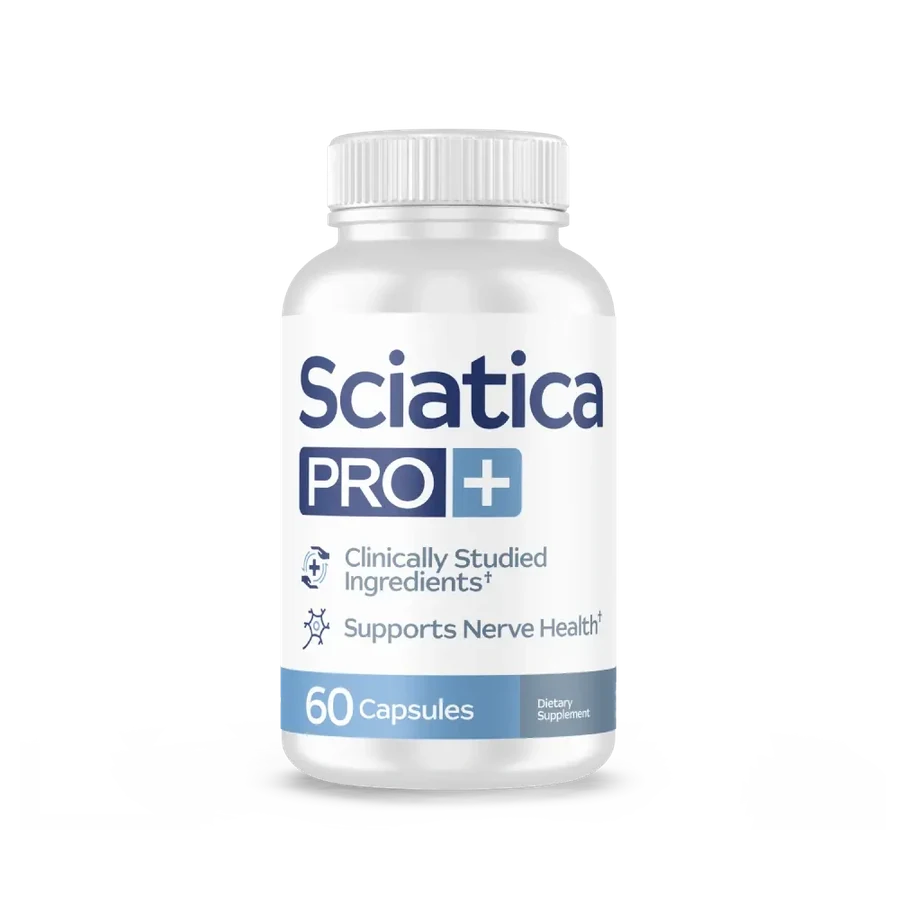
Two claims, both on the front, both with a dagger beside them: “Clinically Studied Ingredients†” and “Supports Nerve Health†”. Both are structure/function claims of exactly the permitted shape. Neither names a disease, neither promises a measurable outcome, and the dagger resolves to the FDA disclaimer on the same label. Read as regulated wording, this is a careful job.
What the name does
The second thing to notice is the name. Sciatica is a diagnosis. MedlinePlus defines it precisely: “Sciatica is a symptom of a problem with the sciatic nerve, the largest nerve in the body.” Its common causes are mechanical — “a ruptured intervertebral disk, spinal stenosis… and pelvic injuries” — and its treatments are “exercises, medicines, and surgery”. A capsule is not on that list.
So the diagnosis sits in the name, above two claims that scrupulously avoid making it. A product name is not a label claim: it needs no disclaimer, nothing resolves it, and it was never notified to anybody thirty days after marketing, because those are rules about claims and this is a trade name. None of the machinery above reaches it.
Why the name is the part that travels
The label itself is careful. It claims “Supports Nerve Health” with a dagger tied to the FDA disclaimer, which is exactly how a structure/function claim is supposed to be written. But a product name travels further than a label does: it is what appears in a search result, on a receipt and in a conversation. Naming a supplement after a condition does work that the printed claim does not, and that is worth seeing clearly before you buy.
Five patterns
The other shapes this takes
A condition in the product name
The shape this post is about. The name states the diagnosis; the printed claims never mention it, and nothing on the panel has to be wrong.
A body part in the product name
A softer version of the same move. Naming an organ implies a destination for the capsule without claiming an effect on it.
A symptom in the domain name
Addresses are not labels. A web address can carry words a front panel may not, and it appears in every search result.
A promise in a headline above a compliant page
The page selling a product is an advertisement. Its heading is not part of the label, and nothing requires the two to agree.
A number in the marketing that is absent from the panel
If a figure appears in the copy but not in the Supplement Facts table, it has not been declared. The panel is the part that had to be accurate.
None of these five is unlawful and none is rare. They are the places where persuasive language can live without meeting the standard that applies to the container. We name the shapes rather than the brands, because a list of competitors written by a seller is an advertisement with a table in it.
Closing
What to read, and what to ignore
The habit is short. Read the panel, read the printed claims, find the disclaimer and check what it is tied to. Then read the name, and treat it as what it is: the most persuasive words on the package and the only ones nobody had to stand behind.
The honest version
Credit where it is due: the regulated half of this package is the best we have examined. Ten ingredients, ten published amounts, no proprietary blend, a full other-ingredients line, a caution panel, an allergen line, a revision code and a named distributor with a city, a ZIP, a phone number and an email. Buy it, if you buy it, for what the panel contains and what the ingredients page works through row by row — not for the word on the front. And if your leg pain is new, severe, or comes with weakness or a change in bladder or bowel control, that is a same-day medical question.
References
Sources
- U.S. Food and Drug Administration. Structure/Function Claims. www.fda.gov. Accessed September 30, 2026.
- U.S. Food and Drug Administration. Information for Consumers on Using Dietary Supplements. www.fda.gov. Accessed September 30, 2026.
- MedlinePlus, U.S. National Library of Medicine. Sciatica. medlineplus.gov. Accessed September 30, 2026.
- National Center for Complementary and Integrative Health. Using Dietary Supplements Wisely. www.nccih.nih.gov. Accessed September 30, 2026.
- NIH Office of Dietary Supplements. Dietary Supplements: What You Need to Know. ods.od.nih.gov. Accessed September 30, 2026.
Order Sciatica PRO+ from the official page
Vegetable capsules, 60 capsules a bottle, two a day with 6–8 oz of water, so thirty days a bottle. Ten ingredients with ten published amounts and no proprietary blend. 60 days from purchase to change your mind. The support line printed on the label is listed in the site footer.
Price shown at checkout · 60-day window from the date of purchase · ships from inside the US · every contact route is in the site footer
Next
Keep reading
The whole label, panel by panel
Every printed line on the wrap, including the ones marketing never quotes.
Read it →Eight checks before you buy
A method for reading any nerve supplement without guessing at the gaps.
Read it →Two words, two different problems
Why almost every study in this category was run in a condition nobody named.
Read it →